27 Oct 2026
The Interplay Between Media Narratives and Odds Adjustments Across Major Leagues
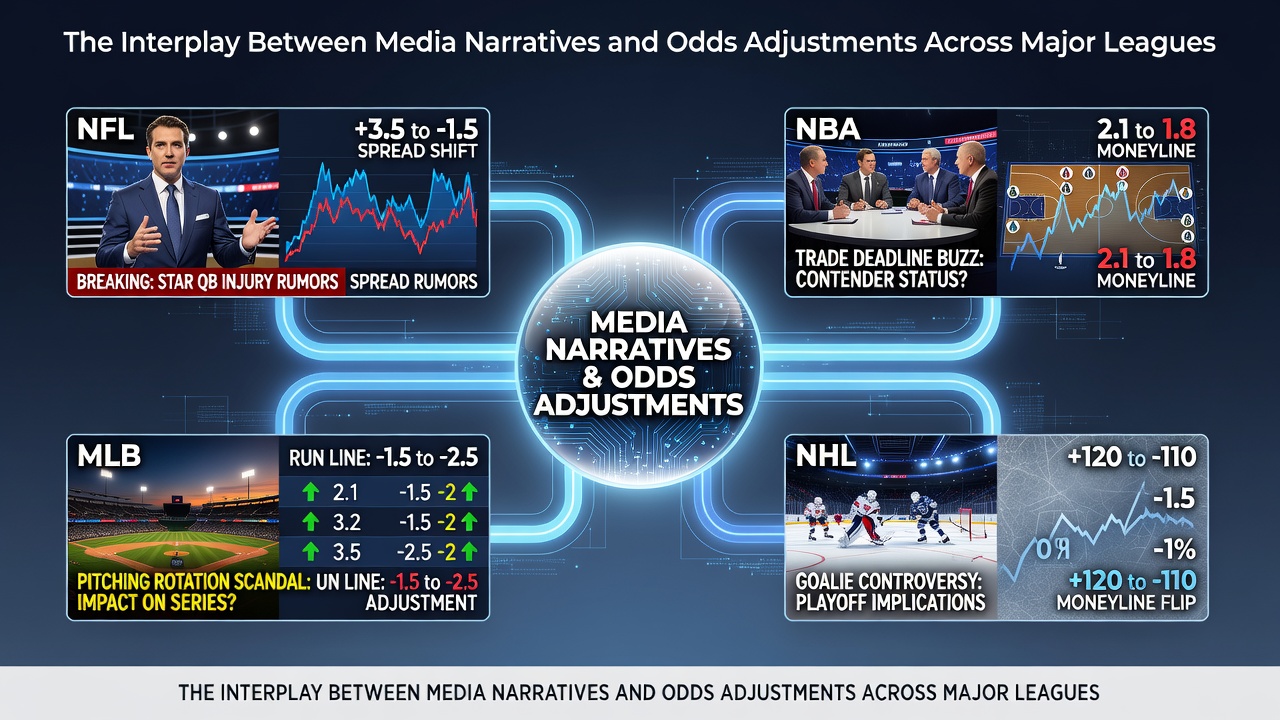
Media narratives shape how bettors approach upcoming games across major leagues, and bookmakers respond by shifting odds to balance risk and capture public interest. Coverage in newspapers, broadcasts, and online platforms often highlights player injuries, team streaks, or coaching decisions, which in turn drives betting volume toward certain sides and forces oddsmakers to react quickly. Observers note that these adjustments occur in real time during news cycles, particularly when a story gains traction in the days leading up to a match.
Media Influence on Betting Volumes
Stories that dominate headlines tend to attract recreational bettors who favor popular teams or dramatic storylines, and this influx of wagers prompts sportsbooks to move lines to protect their margins. Research indicates that positive media attention on a quarterback or star forward can increase bets on that side by noticeable margins, according to figures from the American Gaming Association. In contrast, negative reports about suspensions or poor performance lead to heavier action on opponents, prompting oddsmakers to widen spreads or adjust totals accordingly.
What's interesting is how regional media markets amplify these effects, with local outlets in cities like New York or Manchester creating stronger sentiment around home teams. Data from industry tracking services shows that national broadcasts during prime time often coincide with sharper line movements in the hours immediately after airing. Those who monitor betting exchanges report that media-driven volume spikes appear most consistently in football and basketball, where weekly schedules allow stories to build over several days.
Mechanics of Odds Adjustments
Oddsmakers monitor media sentiment alongside betting patterns, using algorithms that incorporate news feeds to predict shifts in public money. When a narrative emerges about a team's defensive improvements, for instance, lines on under totals may tighten before significant wagers arrive. This proactive approach helps sportsbooks maintain balanced books across NFL, NBA, and European soccer markets, where public perception can swing rapidly based on a single interview or press conference.
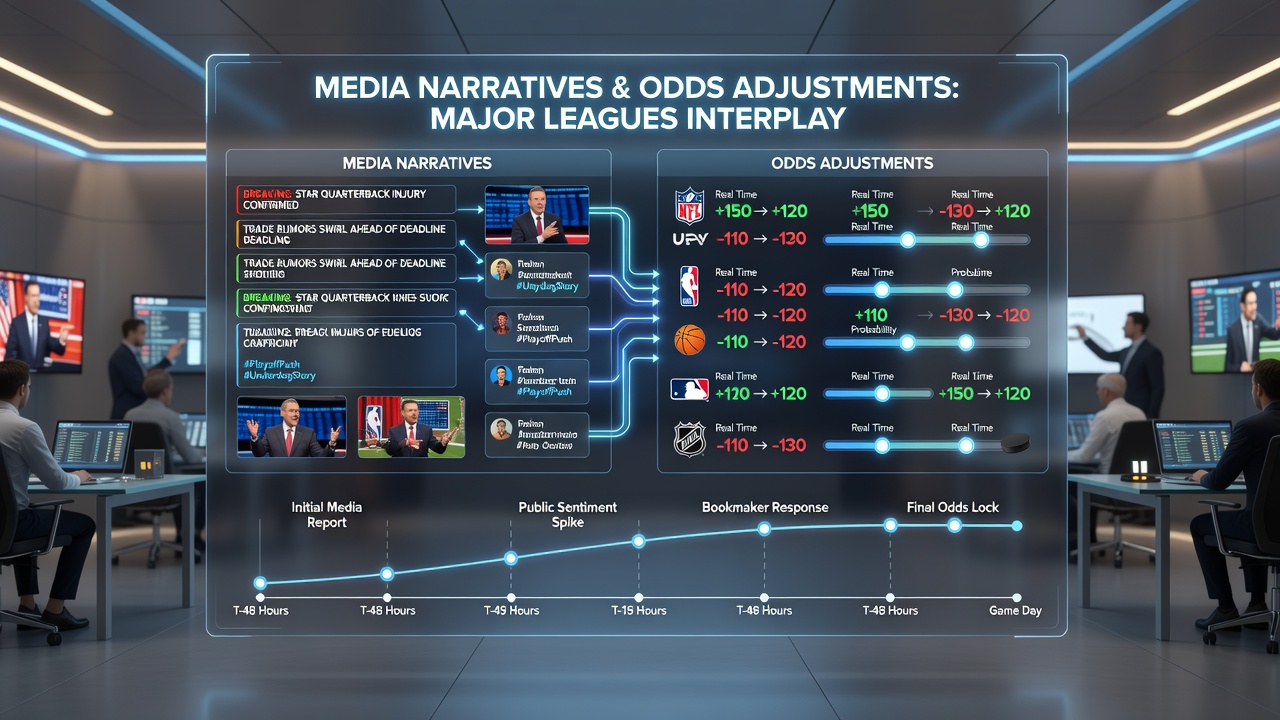
Adjustments typically unfold in stages, beginning with small increments that test market response and escalating if volume continues in one direction. Experts have observed that midweek injury reports covered extensively by national outlets often trigger the largest movements, especially when they contradict earlier expectations. In October 2026, the overlap of NFL and European soccer seasons created multiple instances where simultaneous media cycles affected lines across different sports on the same betting platform.
Examples Across Different Leagues
NBA games provide clear illustrations of this dynamic, as daily coverage of player matchups and load management decisions influences totals more than spreads. A single report about a key center sitting out can shift over/under lines by several points within hours, while similar attention in MLB focuses on starting pitchers and weather conditions. Soccer markets in the Premier League and Bundesliga show comparable patterns, with pre-match press conferences generating enough interest to move Asian handicap lines before kickoff.
Take one instance where sustained coverage of a coaching change in the NFL prompted early money on the new staff's first game, leading sportsbooks to adjust the point spread twice before Sunday. Observers note that international leagues experience these effects on a compressed timeline because of time zone differences and global media reach. Studies from Gambling Research Australia highlight how cross-border coverage of major events increases the speed of line movement compared to domestic-only stories.
Role of Digital Platforms and Timing
Social media accelerates the spread of narratives, allowing information to reach bettors faster than traditional outlets and prompting quicker responses from oddsmakers. Platforms that aggregate news and fan reactions create feedback loops where initial reports gain momentum through shares and commentary. In October 2026, several high-profile NBA storylines about contract disputes coincided with regular season openers, resulting in documented odds fluctuations tracked by multiple betting data providers.
Timing matters because lines opened earlier in the week allow more opportunity for media influence, whereas late adjustments often reflect confirmed information rather than speculation. Bookmakers now incorporate sentiment analysis tools that scan thousands of articles and posts to anticipate volume surges, reducing reliance on manual observation alone. This integration of media monitoring with traditional risk management has become standard practice across operators serving major league markets.
Conclusion
The connection between media coverage and odds movement continues to evolve as technology enables faster information flow and more precise tracking of betting patterns. Major leagues generate constant storylines that intersect with wagering markets, requiring bookmakers to balance public interest against financial exposure. Data from regulatory and industry sources shows that these interactions remain a core feature of sports betting operations worldwide, with adjustments reflecting both narrative momentum and actual wager distribution.